During my time at the Universidad Autónoma de Guadalajara (UAG) School of Medicine, we have continuously sought opportunities to help our academic and professional community grow; especially among students interested in General Surgery. With the expansion of the program, this team was created to provide students interested in Internal Medicine and Obstetrics & Gynecology with the opportunity to gain this valuable experience inside the hospital.
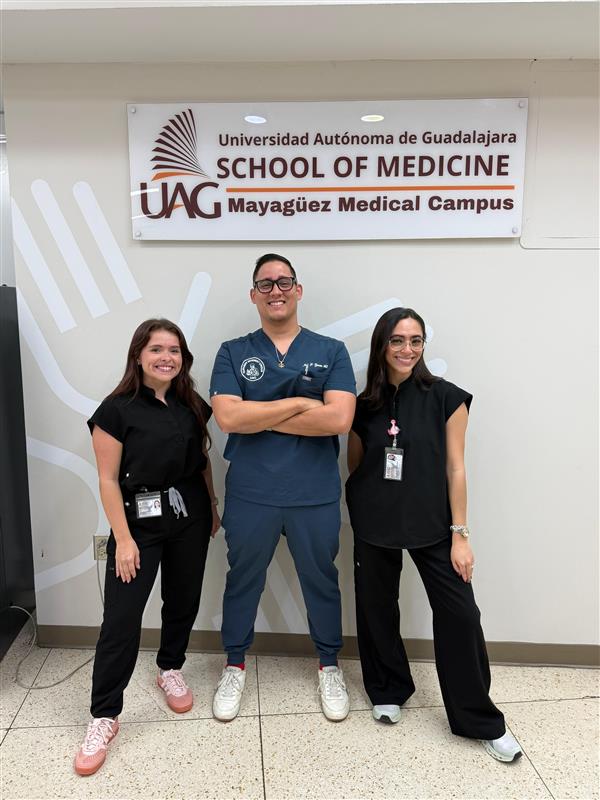
Figure 1. Shadowing program - Surgery Interest Group Third edition with the constant collaboration of
Internal Medicine Interest Group and now with a new part of the team with OB-GYN Interest Group.
The idea evolved into the Surgery Interest Group (SIG) Shadowing Program at Mayagüez Medical Center x UAG Campus Puerto Rico, designed to provide medical students with early exposure to surgical practice in a supervised clinical environment. To make this possible, I began reaching out to UAG alumni currently practicing surgery in the United States and Puerto Rico. Through this network, I connected with Dr. Omar Rovira-Bellido, MD FACS, who became the first surgeon to support this initiative by allowing me and later other students to shadow in his operating room.
Realizing the long-term potential of this program, I collaborated with the SIG board to establish a permanent student leadership position dedicated to coordinating shadowing opportunities, maintaining documentation, and ensuring continuity for future participants. This organizational step transformed a personal initiative into a sustainable, community-based program accessible to UAG students interested in surgical careers. Through this experience, I learned that leadership extends beyond personal achievement; it involves creating systems that empower others to grow. The success of the SIG Shadowing Program represents not only an academic milestone but also a demonstration of how collaboration, mentorship, and initiative can strengthen our medical school’s community and open doors for future medical students' generations.

Figure 2. Hands-on experience after a cholecystectomy
during the program.
It is also important to note that, at present, this initiative represents the only organizations actively and consistently sustaining continuity in this type of clinical shadowing programs. Furthermore, Mayagüez Medical Center is currently the only hospital that actively receives students from the Universidad Autónoma de Guadalajara for structured shadowing experiences, thereby establishing a significant precedent within international academic collaboration.
At the same time, while other university-affiliated hospitals in both the United States and Puerto Rico have not yet demonstrated interest in developing or formalizing similar programs, the outcomes and positive impact of this initiative serve as a catalyst for institutional engagement, encouraging other hospitals to recognize the value of establishing comparable opportunities. In this way, such programs contribute to the expansion of academic and clinical training pathways available to medical students.
Participating in the U.S.-based clinical experiences is one of the most valuable components of preparing for the Electronic Residency Application Service (ERAS) and for successful integration into the U.S. healthcare system. For international medical students, shadowing and hands-on clinical exposure in accredited U.S. institutions provide a direct understanding of patient care standards, documentation systems, and professional expectations that differ significantly from those in other countries. Through shadowing at Mayagüez Medical Center, we gained insight into multidisciplinary teamwork, evidence-based surgical practice, and the culture of patient-centered communication that defines U.S. clinical medicine. Observing the workflow within a structured hospital setting also helped us appreciate the importance of interprofessional collaboration, protocol adherence, and continuous quality improvement, core competencies evaluated during U.S. residency training.
Letters of Recommendation (LoRs); clinical exposure under the supervision of U.S.-licensed physicians enable students to obtain strong LoRs that reflect their adaptability, professionalism, and clinical understanding. Cultural and Systemic Familiarity, Shadowing enhances awareness of U.S. healthcare operations, electronic medical record systems, and interdisciplinary communication styles valued by program directors. Demonstrated Initiative, Securing U.S.-based opportunities independently show motivation and resilience, qualities residency selection committees prioritize. Career Clarity; Immersion in surgical environments allows students to confirm their interest in the specialty while building networks with mentors and potential research collaborators.
U.S.-based clinical shadowing serves not only as a bridge between medical education and residency training but also as a foundation for professional credibility within the ERAS framework. These experiences distinguish international graduates by demonstrating that they have already begun adapting to the expectations, ethics, and rigor of American clinical practice.
Together, these experiences provided a hands-on understanding of surgical protocols, sterile field maintenance, and intraoperative communication, all while developing a professional identity aligned with U.S. clinical standards. Beyond technical learning, I absorbed the culture of accountability, patient advocacy, and ethical decision-making that defines American medicine. These rotations were not limited to passive observation, they represented the foundation of applied clinical learning, reinforcing classroom knowledge through real-world surgical exposure. The mentorship from Dr. Rovira, Cardona, and Pérez, MD, FACS helped us cultivate the confidence, professionalism, and discipline required to transition successfully into future clinical rotations and, ultimately, residency training in the United States.
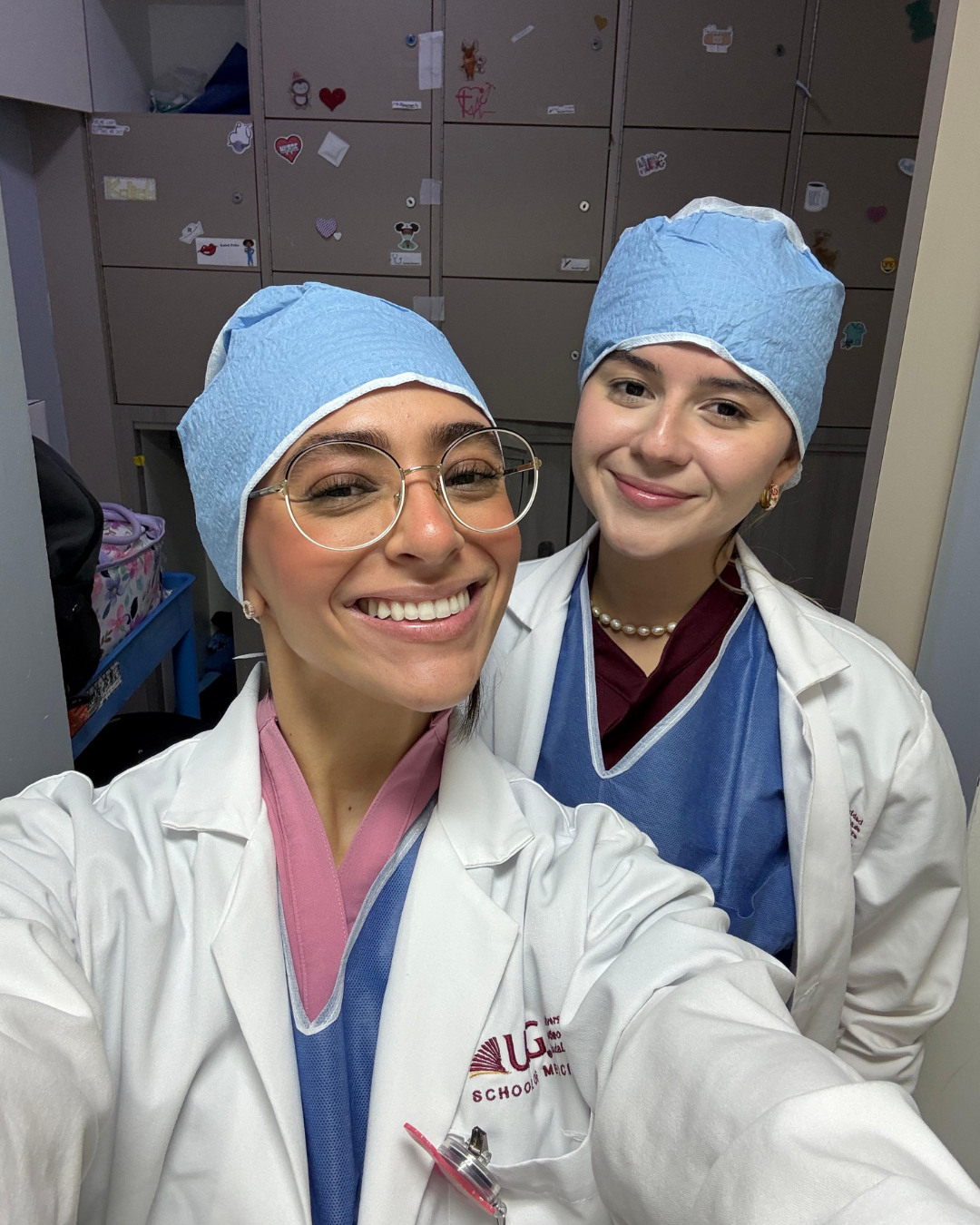
Figure 3. Our students are enjoying their time inside of the Operating Room after a cholecystectomy.
Together, these experiences provided a hands-on understanding of surgical protocols, sterile field maintenance, and intraoperative communication, all while developing a professional identity aligned with U.S. clinical standards. Beyond technical learning, I absorbed the culture of accountability, patient advocacy, and ethical decision-making that defines American medicine. These rotations were not limited to passive observation, they represented the foundation of applied clinical learning, reinforcing classroom knowledge through real-world surgical exposure. The mentorship from Dr. Rovira, Cardona, and Pérez, MD, FACS helped us cultivate the confidence, professionalism, and discipline required to transition successfully into future clinical rotations and, ultimately, residency training in the United States.
In conclusion, it has been both a privilege and a personal accomplishment to have the opportunity to create this experience. As I often say, “If opportunities are not available, we can make them possible by creating them; and with an enthusiastic team, we can help our community and personal growth flourish.” This initiative stands as proof of that belief. What began as an individual effort driven by a desire to give back to my community evolved, through the support of an exceptional team, into something far greater than I initially envisioned when I first arrived at the UAG School of Medicine, still defining my path in surgery and learning how to grow alongside others who share the same passion. I am deeply grateful for the continued support of the Mayagüez Medical Center UAG Clinical Campus, the leadership of former Student Chief Dr. Kym Lee Franqui and Student Chief Ivannah Rodríguez, as well as the dedication of my team and Island Surgical Associates, whose collaboration and commitment made this initiative possible.
A. Autonomous University of Guadalajara, School of Medicine, Guadalajara, Mexico (Surgery Interest Group)
B. Autonomous University of Guadalajara, School of Medicine, Guadalajara, Mexico (OB-GYN Interest Group)
C. Autonomous University of Guadalajara, School of Medicine, Guadalajara, Mexico (Internal Medicine Interest Group)
CONTÁCTANOS
Compártenos tus intereses y en breve un asesor educativo se pondrá en contacto contigo.