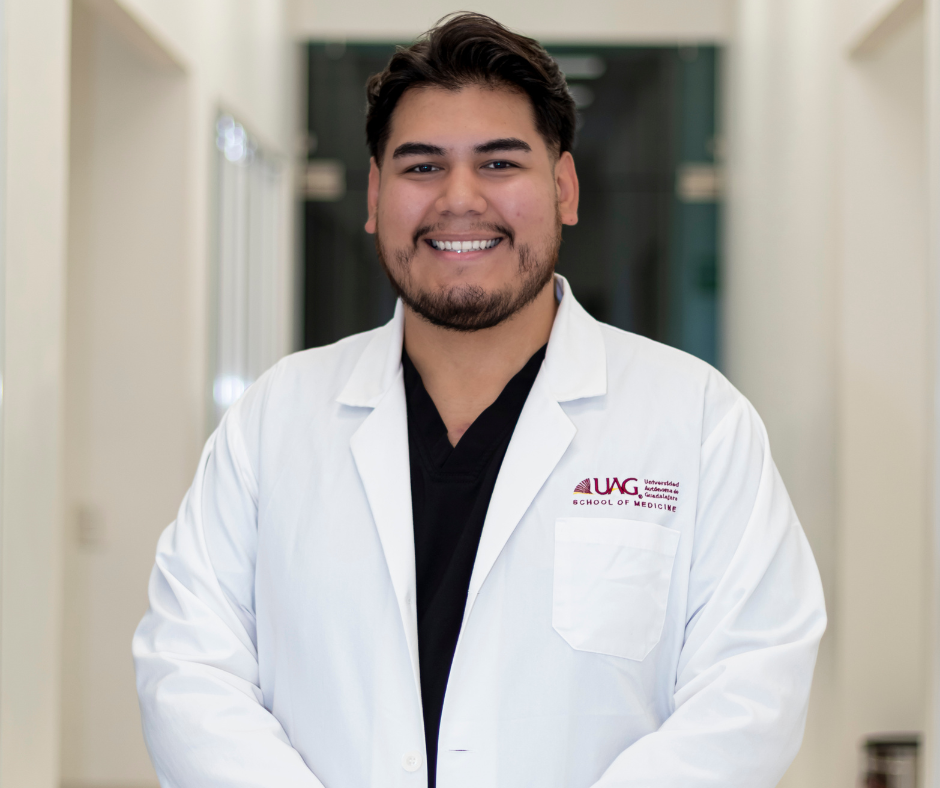
His reflections highlight the emotional labor involved in leading while also managing the demands of medical school.
“Leadership this year has taught me the value of patience, consistency, and showing up even when things get challenging.” For him, collaboration is essential. “Working with other student organizations reminded me that collaboration will always carry us further than working alone.”
He hopes future leaders view their roles as opportunities to open doors for those who come after.
A similar commitment to community emerges in the leadership of Anapaula Lopez, who heads the North American Student Association. Lopez often speaks about the realities students face before even stepping into a lecture hall.
“I am well aware of the sacrifices students have made to go through medical school,” she said. “This is why I am motivated to build a strong, supportive community.”
For Lopez, leadership is inseparable from collective effort.
“The only way anything truly gets done is when we all work together toward a common goal.” She describes collaboration as a source of strength. “Working with other student organizations has shown me how much stronger we are when we combine our efforts.”
Her message to future leaders is rooted in solidarity.
“Keep showing up for each other. The strongest support we have in this journey comes from within our own student community.”
Other presidents echoed these values. Naara Rivera of the Nephrology Interest Group leads with an emphasis on academic and personal growth.
“I am motivated by the opportunity to create meaningful learning experiences for my peers,” she said.
Her understanding of leadership centers on humility.
“Great leaders do not stand in front of their team. They stand with them.” Rivera emphasized the importance of unity in both education and leadership. “Collaboration strengthened my ability to communicate and unify diverse perspectives.”
She hopes future leaders value passion over perfection.
Tiffany West from the Family Medicine Interest Group described leadership as a chance to uplift others.
“Serving as a student leader has been a deeply motivating experience that has allowed me to amplify the voices of fellow students,” she said. She believes strongly in collective action. “Efforts made together create far greater impact than efforts made alone.”
Sebastian Rosas, President of the Psychiatry Interest Group, shared a similar perspective.
“One person’s efforts can spark growth in an entire community,” he said. Rosas learned that leadership requires trust. “Trust is built through honesty, consistency, and being willing to grow with your team.” His belief in inclusive leadership stood out. “Leadership is about making every person in the room feel important.”
Katelyn Millett, President of the American Medical Student Association, is motivated by the progress she sees in her peers.
“Seeing others reach their full potential genuinely motivates me,” she said. For her, leadership is rooted in service.“It is not about the leader. It is about the people they serve.”
She encourages future leaders to measure success by the impact they have on even one person.
Other leaders expressed similar themes. Leila A. Rivera Rosario from the Pediatric Interest Group emphasized resilience and consistency. Shaydeelys Rivera Ortiz of the American Medical Women’s Association focused on empowerment and providing space for others. Richard Fradera from the Hematology and Oncology Interest Group spoke about the importance of humility and organization in service. Patricia Aldama of the Transnational Association of Medical Students highlighted mentorship and urged students to remember the purpose behind their efforts.
Across each account, five ideas appeared repeatedly: community, humility, collaboration, consistency, and legacy. These themes suggest a shared understanding that leadership in medical school is not a title or a role, but a practice. It is the work of supporting classmates through challenges, building spaces where students feel valued, and fostering a sense of belonging during one of the most demanding chapters of their lives.
The collective voices of these student leaders paint a portrait of an institution strengthened from within. Their reflections serve as a reminder that the future of medicine will be shaped not only by clinical skill, but by the ability to lead with empathy and purpose. Their work demonstrates that leadership is most meaningful when it lifts others and creates a path for the next generation to follow.